While scrolling on Facebook this morning, I came across these images posted by one of the pages that I follow:
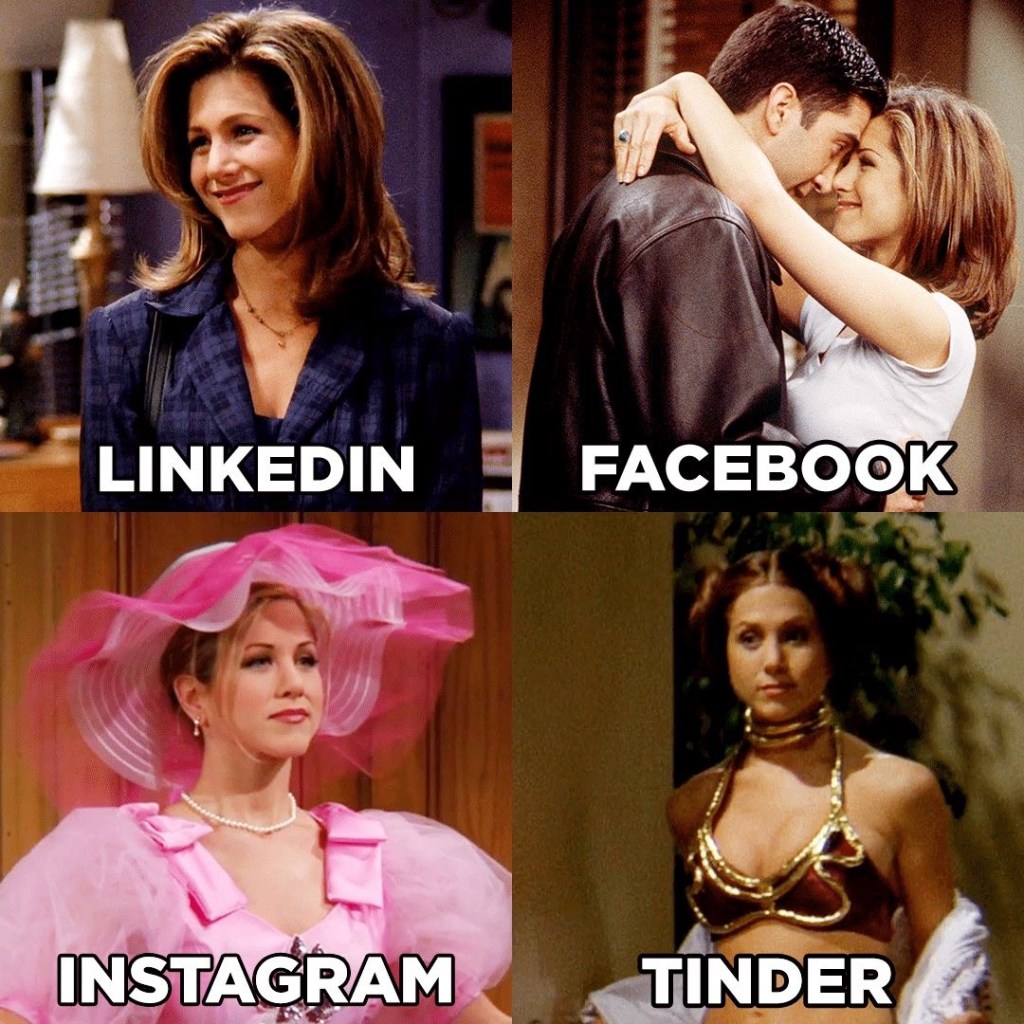

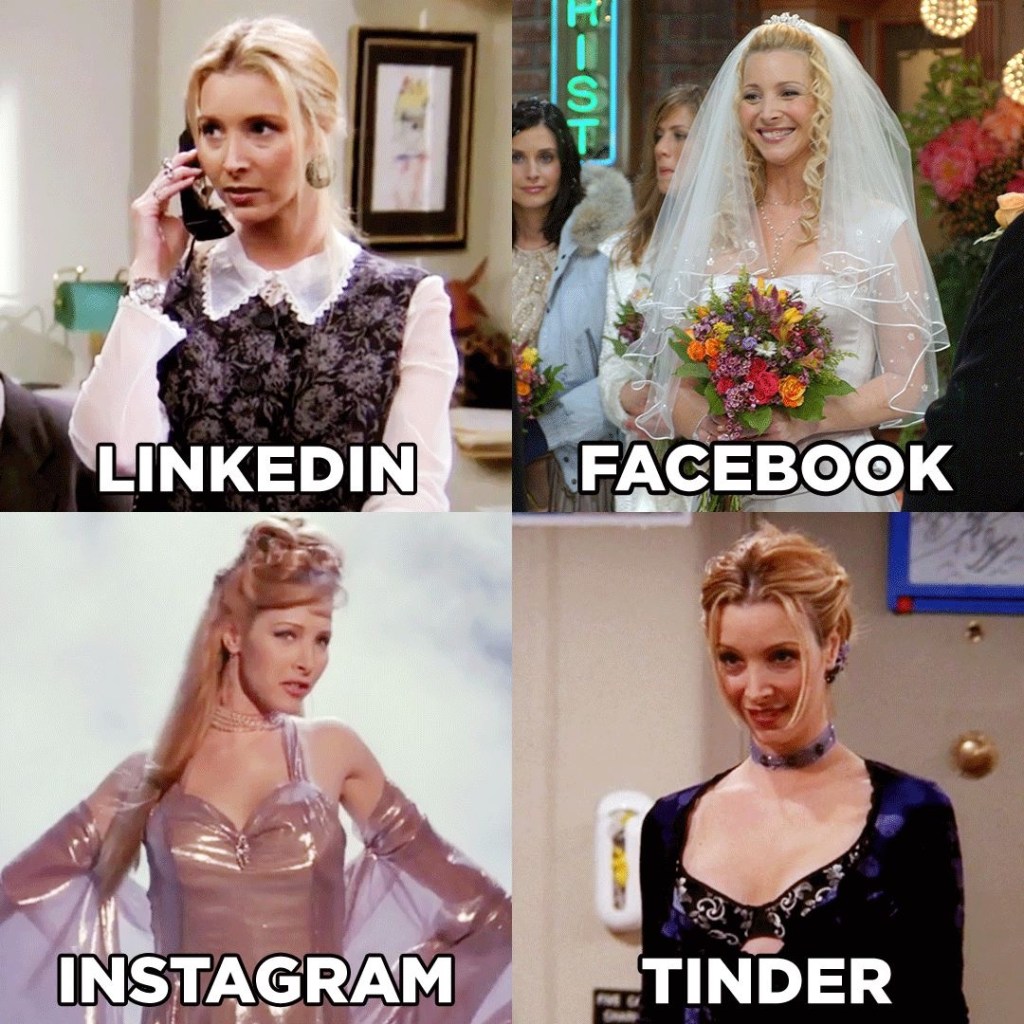
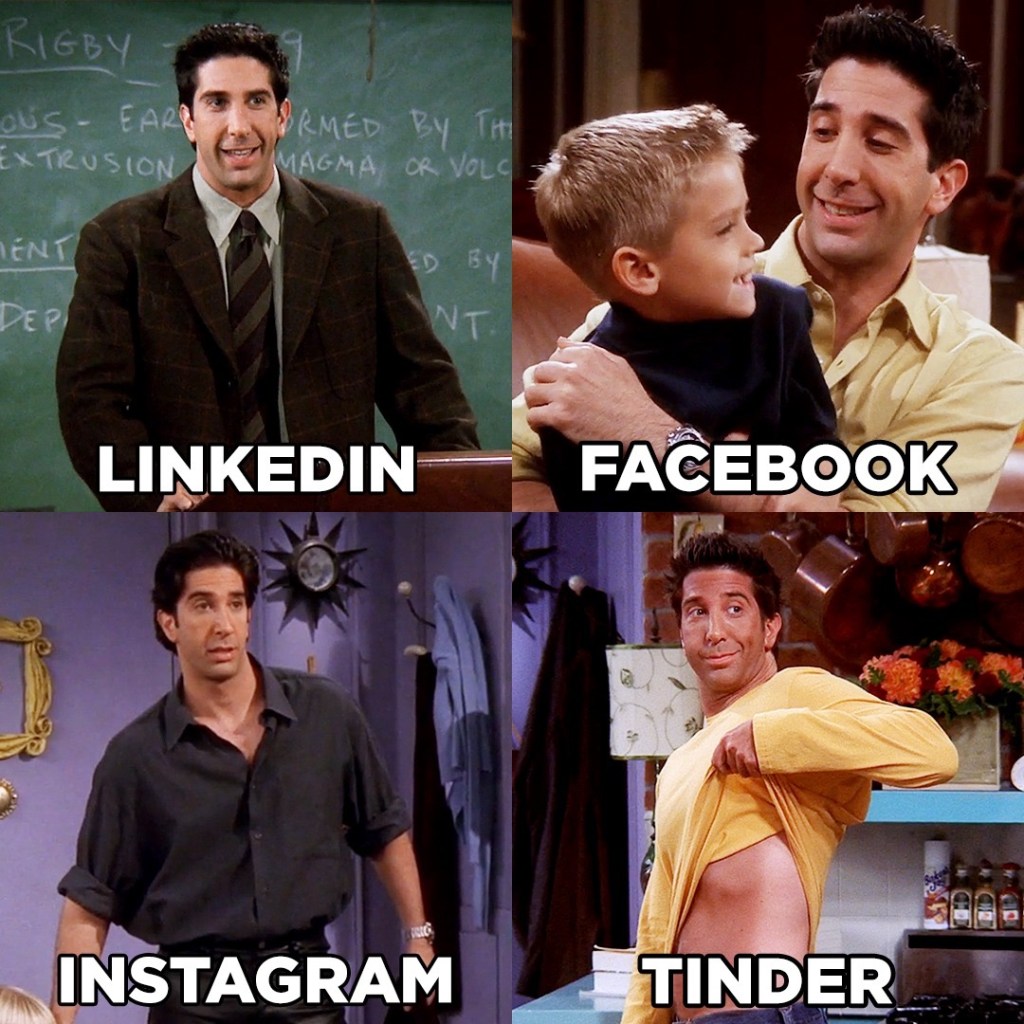

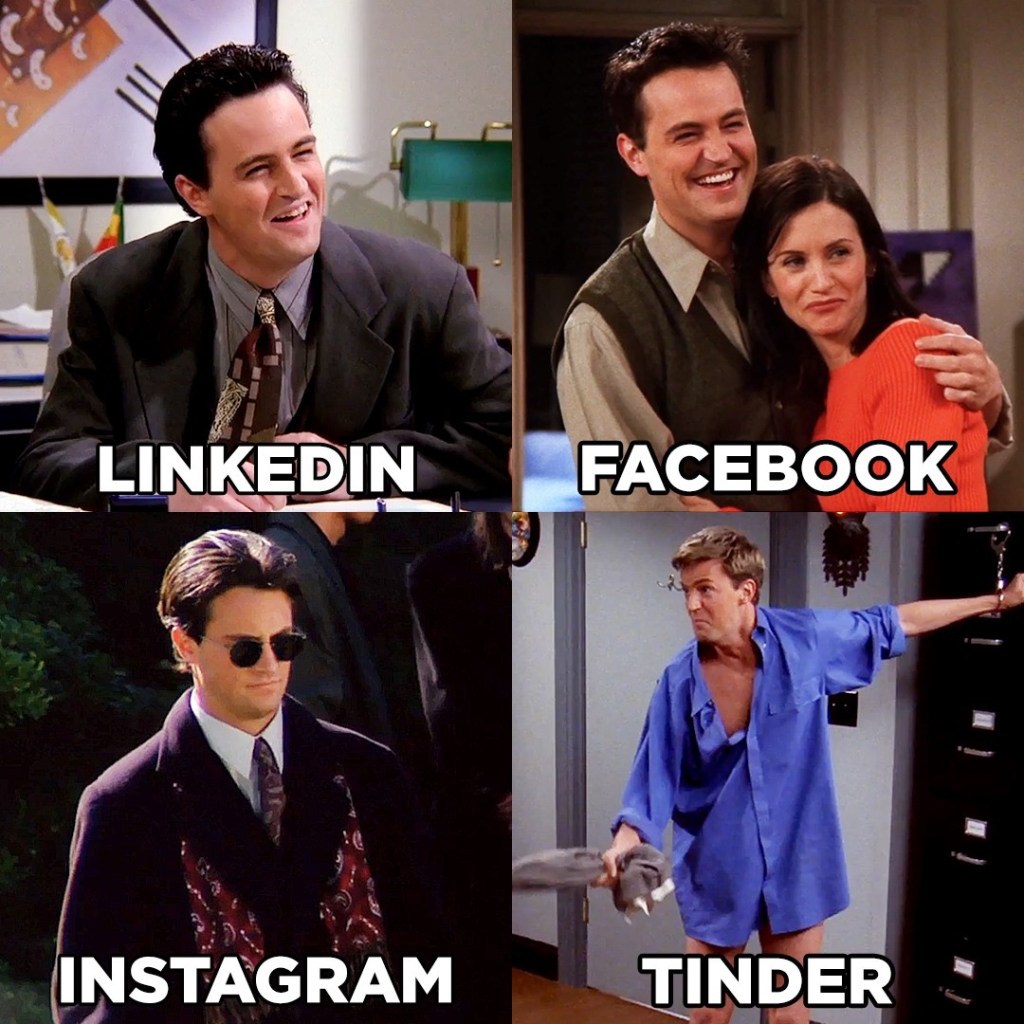
For those of you who don’t know, these are characters from the popular TV comedy sitcom, Friends (my favourite TV show of all time). The show was on air between 1994 – 2004, a time before these media platforms became popular or even existed (LinkedIn, 2003; Facebook, 2004; Instagram, 2010; Tinder 2012). Therefore, it is no suprise that they are not mentioned within the show.
However, fans have collated pictures of each of the characters, reflecting images that would represent them in each of these media platforms. This highlights how there are different attributes that people associate with each of the different platforms depending on how they are used.
LinkedIn – A place for professional networking.
Facebook – A place to share information and images of family and life events.
Instagram – A place to post pictures where you can show off to your internet friends.
Tinder – A place to attract a new date (in other words; a dating tool).
It is because of these different attributes that we reflect different identities online (which can also be seen in the pictures above). No matter what social media platform you use, many people tend to unconsciously change their identity depending on the platform they are using in that specific moment. Whether it is portraying yourself as a professional on LinkedIn or sharing pictures of yourself with your boyfriend/girlfirend on Facebook.
Identities online can vary so much depening on the person and the media platform, but it all comes down to the idea of Audience Design. Everything you post on social media is influenced by your audience. For example, you wouldn’t post a picture of yourself on a night out on your LinkedIn account because it would destroy your professional identity to your current and future colleagues and employers. Instead, you would post your partying pictures on somewhere like your Snapchat story, where your friends can see what you have been up to in the past 24 hours.
I’ve talked a lot here about reflecting your identity through pictures, but the language you use online also changes depending on the social media platform you are using. From putting inspiring quotes in the captions of your Instagram pictures to expressing your opinion on Twitter.
For some people it may be using different languages on their social media because they have friends and family that live in a different country. I’ve seen instances on Facebook where someone has written their status on Facebook twice, once in English and again in another language, allowing them to address both their English audience and foreign audeince.
Identity can be expressed in many way online. Can you think of any examples where you have changed your identity online?
UPDATE (31/01/2020): So over the past week, several of these have popped up on my social media pages. Turns out that is has become a new meme, known as the ‘Dolly Parton Challenge.’
Read more about the Dolly Parton Challenge here: https://time.com/5770992/dolly-parton-challenge/
 MJC Language and New Media Blog
I love this post! I agree – it does come down to audience design to what type of identity you want to portray on a platform. My LinkedIn profile is different to my Facebook because of what I want certain people to know about me. I have noticed an increase of posts about ‘Dolly Parton Challenge’ on my own feeds. I have even seen some of them depicting animals with different personalities; this is possibly designed for a humorous effect.
LikeLike
I agree with you there, the ‘Dolly Parton Challenge’ is definitely designed for humour! Some of the pictures people have put together are so random and weird, yet they still fit the stereotypes of those platforms which is pretty fascinating.
LikeLike
The idea of online identities is really interesting especially for our age group where I think this is probably the most relevant. Many young people create a ‘private’ Instagram account, also known as a ‘funsta’, where only close friends follow the account and funny, ugly or outrageous pictures are posted. The audience for the main account is often much larger and includes people who may just be friends of friends or even strangers, rather than the closer and more personal audience of the ‘funsta’. This reflects back to your idea that what you post online depends on who will see it. In response to your question, I wouldn’t say I necessarily change my identity online but, as pointed out on the meme you used, my Linkedin account definitely shows a more serious and employable side of me. I also often consider creating a new Facebook account and deleting my current one that has embarrassing posts from when I was 10 or 11, in the worry that a potential employer may see them.
LikeLike