
Reading and writing is one of the first things we learn when we start school, but we are never taught how to communicate online.
My sister is only 8 years old. She’s too young to have a phone and to be going on social media pages like Facebook and Twitter. However, she has already started developing her online writing skills. She only really goes on her iPad to play games and watch YouTube videos, but whenever she sends me an iMessage, it is a different sort of language than what she uses when she speaks or her writing at school. From the over-extensive use of exclamation marks to the animation of the messages, she does it all.
Yet, she has never been taught that. I personally haven’t taught her to message like that and neither have my parents. So where has it come from?
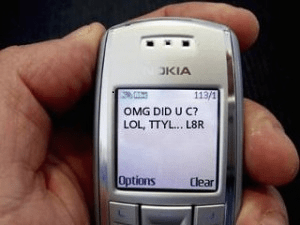
As technology continues to develop and upgrade, we have been given the opportunity to explore our written communication online. Before, all we could do is type a simple message. We even became creative with ways to make our texts shorter and therfore quicker to write.
Whereas now we have so much available to us in order to communicate. For example on Snapchat we can send a snap to our friends by taking a picture of ourselves or something going on around us and add text and/or filters to convey a message. Sometimes we don’t even do that, we just send the picture or video that we have taken.
Another example is GIFs, what better way than to show your reaction to a message than through a GIF! Having a GIF to emphasise how we are feeling is so much easier than attempting to type it, even if it is more dramatic than we would actually be!

My personal favourite is the use of emojis which I find help convey a tone of a message. For example, my friends and family know not to take me seriously if I add a laughing emoji at the end of message, even if I say something that sounds particularly harsh (such as “You’re an idiot!😂”)
Technology has opened up a wide range of ways to communciate to our friends and family online that it has become so natural for us to use. What is your favourite method of communicating online?
 MJC Language and New Media Blog
I’m also a massive user of emojis, much to the dismay of my flatmates who like to mock me because they think emojis are childish 💔 Another method of communication I love is voice notes on Messenger and Snapchat. I think they allow for emotional ‘leakage’ in terms of vocal tone, sarcastic inflection and emphasis but they also allow you to craft and revise your messages in a way that a typical voice call does not. That being said I think the most unique part of online communication is its’ collaborative nature. Websites like Wikipedia are entirely unauthored as anyone can add to and edit them, and Reddit’s main feature is the ability to upvote and comment on others’ words. It is very interesting to think about what social media would be like if we were taught how to use it in school as I suspect this will start to be implemented soon. Although, as it’s been with us, I’m sure our generations’ kids will schooling the teachers on social media, and not the other way around!
LikeLike
I think you have brought up some really interesting points about the development of online communication. I definitely agree with you about how certain apps or forms of communication that are widely available have made it easier to keep in touch with people. For instance, sending a ‘Snapchat’, it makes communicating what you’re doing, how you feel or explaining to someone else what to do so much easier, in a click of a button you have a picture or video at your finger tips that truly does ‘say a thousand words’. It lessens the time spent explaining something as you can now show and share instantaneously. The point you made discussing how we have all become creative at shortening messages to get to the point you’re trying to say quicker in texts and so on, I found this very relatable, as I for one sometimes when I’m in a rush need to send a message quickly therefore don’t have time to spend 10 minutes explaining what I mean. Although, do you not think that this can hinder communication also? As I’ve mentioned I do agree that the shortening of messages and sending pictures instead of writing long messages does save time when you’re in a rush but I also feel if you’re doing this all the time it then becomes the norm. It becoming the norm just creates lazy communicators losing all sense of personal touch when you’re sending someone a message, especially in times where you have the time to sit and think about what you want to say and convey to that person.
LikeLike
I love how you highlight emojis as another level of speech. Which brings me onto to question the use of emojis with our newer generations. Do you think, given how children now learn to read using technology and emojis, that emojis will the future of the English language and school will implement them in their teaching habits?
LikeLike