You are currently sat here reading this blog post. If you look around wherever you are right now, I bet you could list at least five things that have some sort of language and text on it that requires reading. These were the first five things I spotted when I did the same thing while writing this blog:
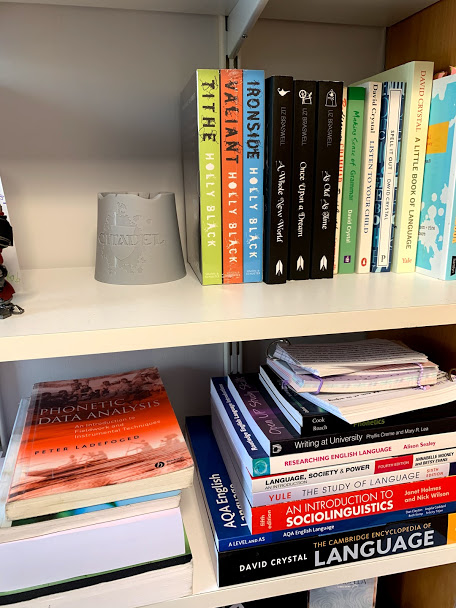

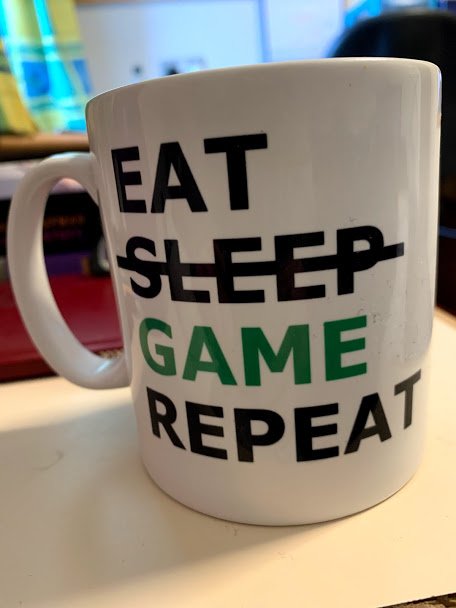
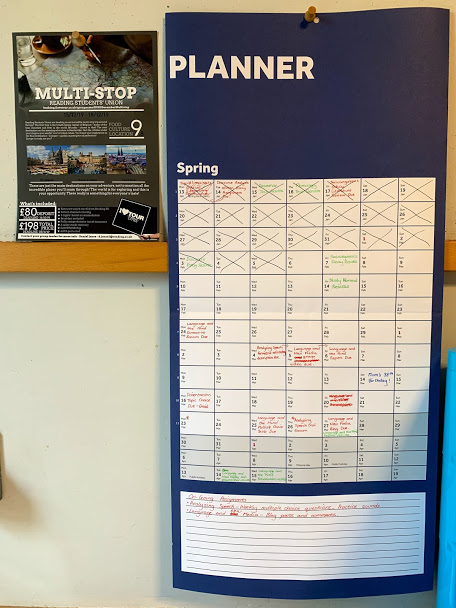

Reading is such a necessary part of life nowadays. There is always something around us that requires us to read, whether it is a textbook, a message on our phones, a street sign, a poster on the wall, etc.

Before the invention of the printing press in the 15th century, language for the purpose of reading wasn’t seen necessary or influential like it is today. Stories were passed on from generation to generation. Only the elite were considered important enough to have a proper book of the Bible becuase they took so long to write. A large percentage of the population couldn’t even read.
Look where we are now though; Words are everywhere, in all different forms.
It’s not just books anymore, it is products and clothes and decorations.
We use words for advertising and aesthetics.
The development of technology from the printing press has really changed how and where we read. We have so much technology nowadays that people don’t even realise they are reading half of the time when they are physically looking at words and reading them.

For example, I find it hilarious when people say “I don’t read” or “I don’t like reading.” Yet, five minutes later, they are sat there on their phones, scrolling through their social media pages, READING! We have text on our phones that we read continuously!
It has even gotten to the point that books are no longer required to be printed because we can access e-books on so many different devices. In some cases, we don’t even have to read the book ourselves because we can listen to audio books.
Personally, I don’t like reading E-books or listening to audio books. While it makes it so much easier to access e-books for things like required reading for a module or listening to a book while doing jobs around the house, I find there is nothing better than sitting down with a physical book in my hand when it comes to leisure reading.
The printing press has been developed so much to the point that one day we might not even need to print books at all, making the original press itself pointless. Yet, if it wasn’t for this original invention, we might not have even got to the point where we are reading e-books or listening to audio books.
What do you think? Comment below and let me know your thoughts.
 MJC Language and New Media Blog
I completely agree about e-books! When I’m researching for an essay, my heart sinks when I find out that a book I need is only available on ProQuest or the like because I love paper books. I wonder though if this will soon be a foreign concept to the generations to come. (I really hope not!)
LikeLike
I really like your ideas in this blog Morgan. I agree with you that I prefer to have a paper copy of a book in front of me when doing an online test or if I’m reading a book on Holiday for example. However, the importance of ebooks is huge when writing a long detailed essay that requires a lot of references. No one has time nowadays to fight over a book in the library, or spend hours reading a whole chapter just to find a single quote. If only there was a way to search for certain words in paper books like there is in ebooks.
LikeLiked by 1 person
This post was really interesting, I myself am guilty of saying I don’t read, even though, as you said, I’m then on my phone less than two minutes later. I agree that it’s always nice to read a physical book, but personally I think the convenience of E books and audio books makes them more popular. I think the environmental benefits of ebooks also gives them a lead; a lot of people are drawn to the fact that no trees have to be cut down to produce an e book. But I guess it’s just personal preference!
LikeLike
I totally agree with many of your views in this blog post!
A book you may be interested in is Bill Gates, 1995, “the road ahead”. He mentions his thoughts about the computing revolution and his thoughts about how the internet would shape the future (which is now the present). Gates wrote that the internet will transform our culture as dramatically as Guntenberg’s press did in the middle ages. And like you mention in your blog post that the printing press began the change of the written document the internet has completely changed the way we communicate. And I agree with you when you say that it has changed the way we read.
In my opinion one of the biggest lies surrounding our culture is that we do not read. The truth is most of us read continuously in a perpetual stream but instead of reading novels, newspapers (like our parents did in their regime), we read text messages, social media and almost everything online. We have E books and other resources at a mere click of a button. Dr.Google has the answers to many of our questions and the topics we want to learn about. I can definitely say I don’t read linearly online though like I would if I was reading a novel. I have become accustomed to skimming through articles and sometimes jump from one tab to the other in case one article fails to pique my interest. I often completely reject an opinion in an article even before I have read the first paragraph. I get blinded by my own opinion. I read web pages in a hurried pattern, stop at the headline that grasps my attention, scroll down a bit, get distracted by the multiple pop-up ads or links in the text or simply finish it unread at times.
The internet has definitely changed the way we read!
LikeLiked by 1 person